A standalone mobile wound-care service
Could your community support a dedicated mobile practice? Test reachable demand, referral relationships, staffing, travel time, supplies, collections, and the startup cash needed to operate on its own.
Services
Understand the demand, staffing, routes, reimbursement risks, and cash needs before launching or expanding a mobile care service.
Bringing care closer to patients takes a workable operating model. Before launching a mobile service, a practice needs to know who it can reach, how clinicians will travel, what payers will reimburse, and how much cash the service will need.
Arclight develops practice-specific feasibility studies for mobile care, rural outreach, and service expansion linked to an existing clinic. We examine local demand, referral pathways, realistic care patterns, staffing, reimbursement, documentation requirements, and startup cash, then show which assumptions drive the decision.
Mobile wound care is one example of this work. The example below shows how local need, care settings, drive time, and payment assumptions come together in a feasibility study. Arclight Access, described further down, offers supporting product and prepayment reimbursement options for wound-care practices.
Wound-care example
In a planning study for a rural community in Texas, we evaluated mobile wound care as an outreach component of an existing limb-salvage practice. The analysis separated the mobile service's economics from the clinic's potential contribution and compared care settings, drive-time bands, staffing costs, and collection delays. It recommended a limited pilot with local validation before expansion.
Rural communities across the United States
A rural community may need wound care closer to home. The map brings rural geography and diabetes prevalence together to help focus an initial assessment. The next question is whether enough patients can be reached, referrals can be sustained, and clinicians can deliver that care within a workable route and budget.
Medicare's 2026 changes to skin-substitute payment make current reimbursement assumptions essential. If a local mobile provider has closed or reduced service, a feasibility study can examine the resulting access gap and test whether a new service could meet that need.
A national perspective on rural care
Rural communities & diabetes burden
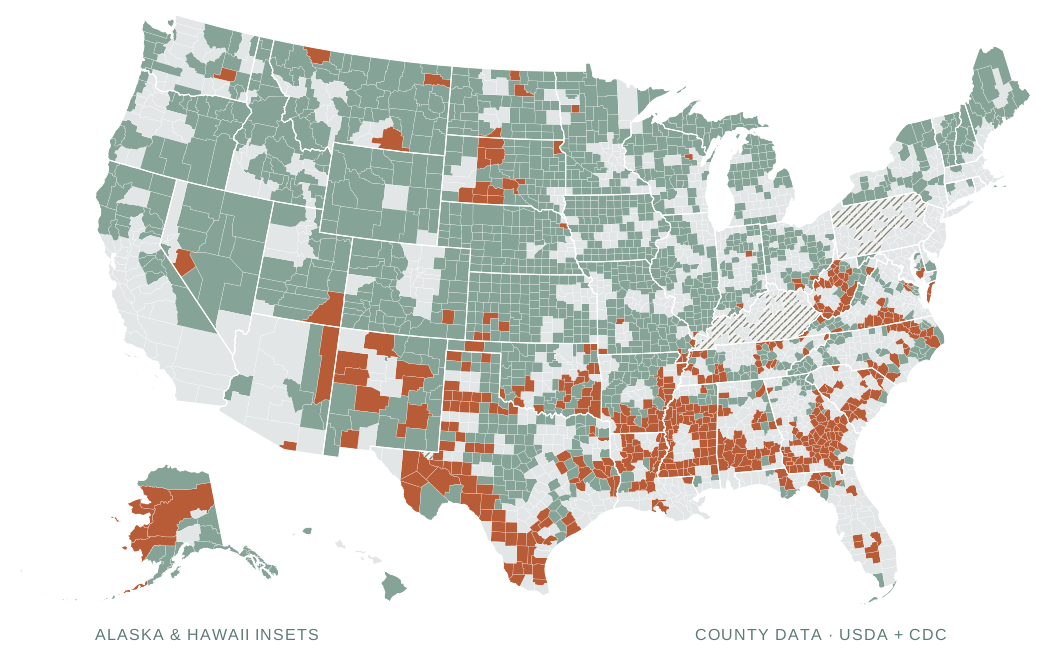
Rural: USDA nonmetro counties. Diabetes: modeled, age-adjusted adult prevalence, 2023 estimates.
Sources: USDA 2023 · CDC PLACES 2025 release · County data
Could your community support a dedicated mobile practice? Test reachable demand, referral relationships, staffing, travel time, supplies, collections, and the startup cash needed to operate on its own.
Could mobile wound care extend a vascular or limb-salvage clinic, podiatry practice, or other established service? Compare the added staffing and route costs with existing resources, while keeping mobile economics separate from the clinic's contribution.
Now available in ChatGPT
Explore the service idea before you invest.
Use Arclight's published ChatGPT plugin to work through a healthcare service expansion or a new operation. For mobile wound care, connect local demand and referral access with staffing, travel capacity, payment assumptions, operating costs, and first-year cash flow.
Build an assumption register with source notes, compare feasibility scenarios, and identify what to validate before launch. Bring the resulting decision brief and pilot questions into a practice-specific study with Arclight.
Sign in to ChatGPT to install the plugin. Availability depends on your account and workspace settings.
Clarify the service, geography, settings, and decision you need to make.
Examine local need, existing care options, and referral access.
Connect staffing, travel or room capacity, supplies, and incremental costs.
Use official fee-schedule guidance and sourced payment and collection inputs.
Compare capacity, break-even conditions, delayed collections, and startup funding.
Create a decision brief and conditions to proceed, narrow, or stop.
A question to start with
“Compare a standalone mobile wound-care service with adding mobile outreach to a rural podiatry practice. Use aggregate or synthetic inputs and show route capacity, break-even conditions, cash needs, and what to validate locally.”
Use public, aggregate, or synthetic information only; do not enter patient records or identifying health information. The plugin includes a synthetic mobile-care example and a calculation script where Python is supported. Its outputs are preliminary planning scenarios that require local and professional review; they do not determine treatment, billing eligibility, coverage, or profitability. The plugin itself does not send conversations or files to Arclight.
New or expanded service
For a new mobile practice or an established clinic considering outreach, compare the clinical need with the resources and economics required to deliver the selected service.
Existing service
For a service affected by reimbursement changes, rising review workload, or poor route economics, identify what would need to change for the model to remain workable.
Wound-care EMR template setup can turn the selected operating model into evaluation, follow-up, and CTP documentation workflows, with clinical review, vendor coordination, and provider training.
Evaluate the service area, Medicare population and payer mix, existing providers, referral sources, and evidence of unmet local need. Separate available data from assumptions that require local validation.
Define which patients and settings the practice can serve, which visits and treatments it would provide, and how its role fits with home-health agencies, facilities, and existing clinicians.
Compare clinician roles, compensation, local availability, facility rounds, and mobile routes. Model realistic completed visits and the capacity lost to travel rather than relying on a simple mileage radius.
Assess relevant payment and coverage rules, payer contracts, consolidated billing, documentation, authorization, and audit exposure. Evaluate WISeR requirements where the selected services and location fall within the model's scope.
Model collections, clinician labor, supplies, equipment, product costs, and genuinely new overhead. Show the new service's operating result separately from the existing clinic's contribution, including where procedures occur and when collections arrive.
Identify facts to confirm before launch, measures to track during a limited pilot, and thresholds for continuing, changing, expanding, or stopping the service.
Clarify the practice's clinical capabilities, target patients, service settings, geography, and existing resources.
Review market data, payer requirements, staffing and supplier inputs, and the practice information needed to test local demand.
Compare operating scenarios, direct and incremental costs, collection timing, travel, and sensitivity to the assumptions that matter.
Set out the recommendation, outstanding questions, pilot measures, and conditions for a launch or expansion decision.
The study is tailored to the practice, service settings, and payer environment. Proposed payment changes are modeled separately from rules currently in effect. Projected demand, referrals, collections, and operating results are planning scenarios to validate locally.
Supporting program for wound-care practices
For wound-care practices planning or operating a service, Arclight Access offers product access and prepayment reimbursement support. The program is available separately from a feasibility study.
Arclight Access is built around a flexible model: purchase skin substitutes or other wound-care products, select prepayment reimbursement support, or bring both together through a Complete Program.
When selected, the support path starts before product application with documentation readiness and can continue through prepayment response and administrative appeals. Arclight prepares clinic-reviewed, clinic-submitted packages for lower-level proceedings and offers ALJ representation after a valid appointment.
Bring a wound-care product purchase and a separately priced prepayment reimbursement support package together in one written order.
Arclight Access also offers Product Only and Prepayment Reimbursement Support Only pathways under a written order.
For a skin substitute claim that may have been routed to WISeR outside the model's diagnosis-limited scope, request Arclight's editable response template or discuss claim-specific prepayment support.
Purchase skin substitutes and other wound-care products with product-specific billing assistance, reference materials, fulfillment coordination, and tracking support.
Select an initial pre-application review of existing records, focused feedback on apparent documentation gaps, and one reasonable follow-up review.
Receive administrative arithmetic and order coordination based on wound measurements and clinical selections documented by the treating team.
Receive an organized reimbursement support package, cover letter, exhibits, draft forms, and submission instructions for an eligible prepayment matter.
Prepare clinic-reviewed and clinic-submitted packages for MAC redetermination, QIC reconsideration, and an OMHA/ALJ hearing request.
When selected, prepare the hearing record and provide non-attorney representation after a valid claim-specific appointment.
Select Product Only, Prepayment Reimbursement Support Only, or the Complete Program in a written order.
When selected, Arclight reviews existing records before product application and provides focused feedback plus a follow-up review.
For an eligible prepayment matter, Arclight prepares the record, position paper, cover letter, exhibits, draft forms, and submission instructions.
Arclight prepares clinic-submitted lower-level appeal packages and, when selected, provides ALJ representation after appointment.
Post-payment audits, recoupments, overpayment determinations, and retrospective appeal exposure are handled through a separate Arclight Audit & Appeals engagement.
Understand the demand, staffing, routes, reimbursement risks, and cash needs before launching or expanding a mobile care service.